BIO

Evolutionary Ichthyologist & Systematist

I love fishes (yes, all 34,000+ species of them!). They have been the thread running through my scientific life from the start. What began with taxonomy and fieldwork as an undergraduate in Colombia grew into a research program focused on understanding fish diversity, evolution, and how species and populations respond to environmental change.

My work has taken me from canoes to research cruises, museum collections, and labs, and increasingly into collaborations that connect specimens with genomic, morphological, ecological, and spatial data.

What I enjoy most is seeing a fish and immediately thinking, “What species is this?” Every identification feels like a puzzle, with clues that can reveal the history behind that fish—where it came from, how it is related to others, where it fits on the fish tree of life, and why knowing that matters for conservation.
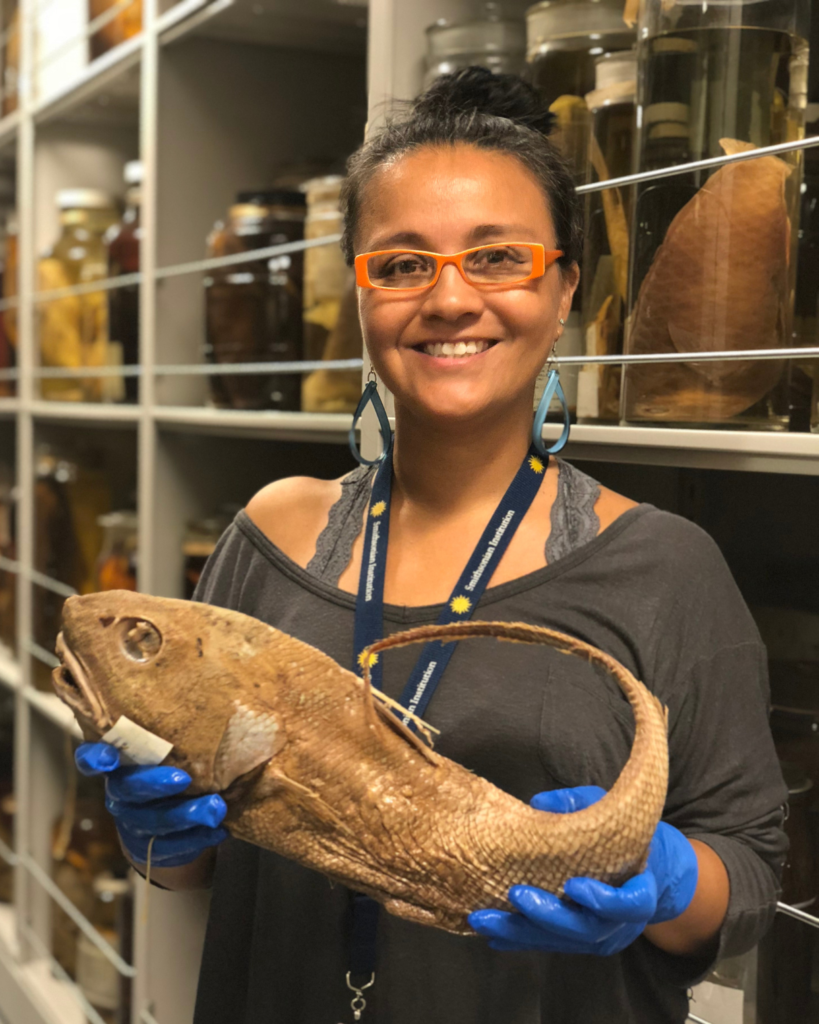
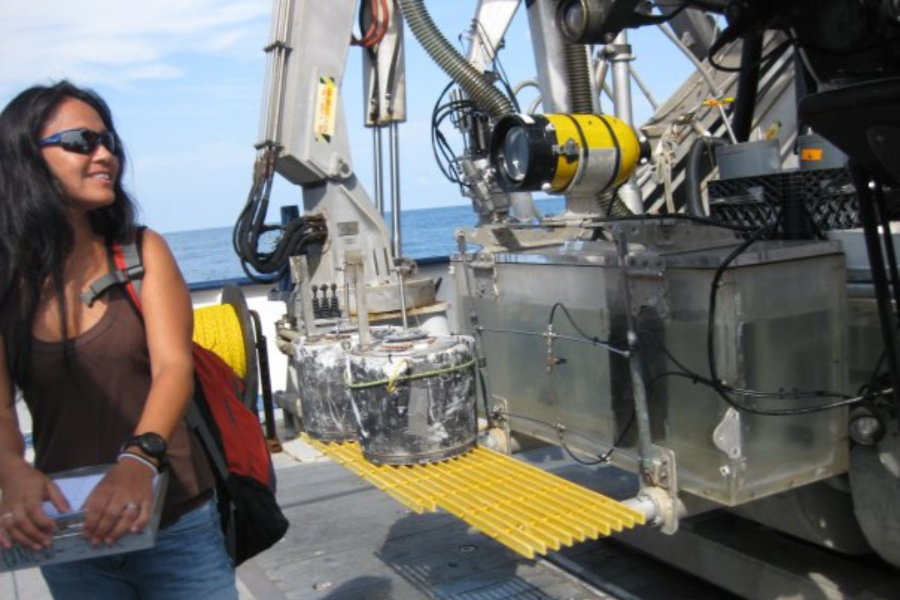
Photo credit: Sandra Raredon

Photo credit: Jenny McClain

HOW I GOT HOOKED ON FISHES

From Curiosity to Ichthyology

I was fascinated by the natural world long before I knew ichthyology could be a career. Growing up in Colombia, I loved watching Jacques Cousteau and Naturalia, a Colombian TV show about animals and nature. I also collected the natural-history cards that came with Chocolatinas Jet, learning the binomial names of the species they featured. At school, I volunteered for the dissections no one else wanted to do and eventually became an assistant to my biology teacher, Yolanda.

Fishes took over during my first semester at the Universidad Nacional de Colombia. A course on the scientific method taught me how to turn curiosity into research questions, and I kept finding ways to get closer to fishes and the science behind them. I started as a volunteer in the university’s ichthyology collection with curator Germán Galvis, and it later became my first paid research job.

A defining moment came when Arturo Acero, my marine fish professor, invited me to join the first deep-sea expedition exploring the Colombian Caribbean slope.

I said yes—and that decision set the course for everything that followed.

WHEN GADIFORMS TOOK OVER

From a Deep-Sea Cruise to a Research Lifeline

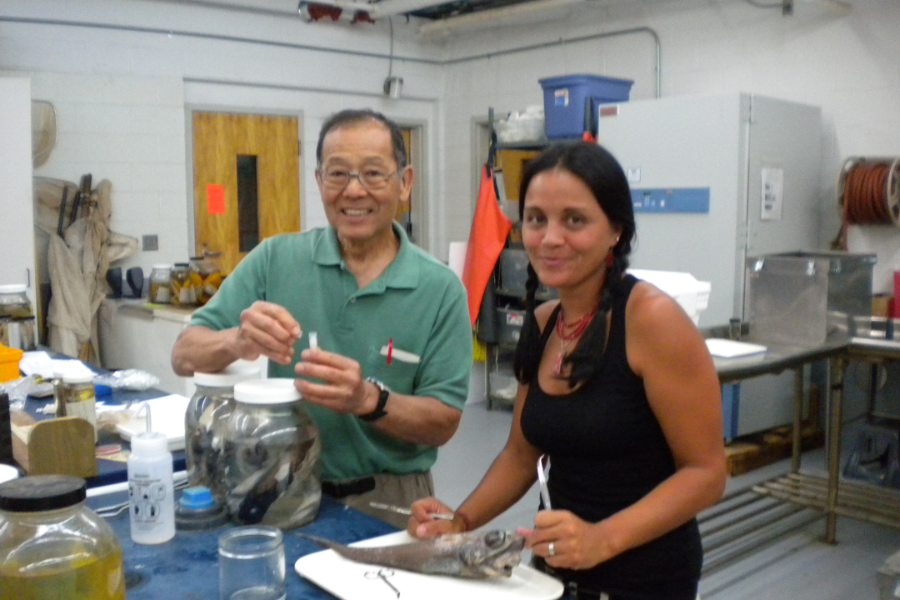
During my undergraduate thesis on fishes from the Colombian Caribbean slope, we collected many deep-sea species—including the gadiforms that would eventually become the focus of much of my research. That work took me to the California Academy of Sciences, where I had the chance to work with gadiform expert Tomio Iwamoto.

Tomio not only helped me learn the group; he also saw the potential in the questions I wanted to pursue. He began collecting some of the first tissue samples for my master’s research on gadiforms and, over the years, opened many scientific doors for me. That collaboration helped turn an undergraduate fascination into a research direction I am still following today.

Photo credit: Eric Hilton

WHERE THE QUESTIONS HAVE TAKEN ME

Across Habitats, Methods & Institutions

Fishes have taken me through very different environments, institutions, and ways of doing science. Each step has added a new perspective—from field observations and specimen-based taxonomy to genomics, morphology, and spatial ecology.

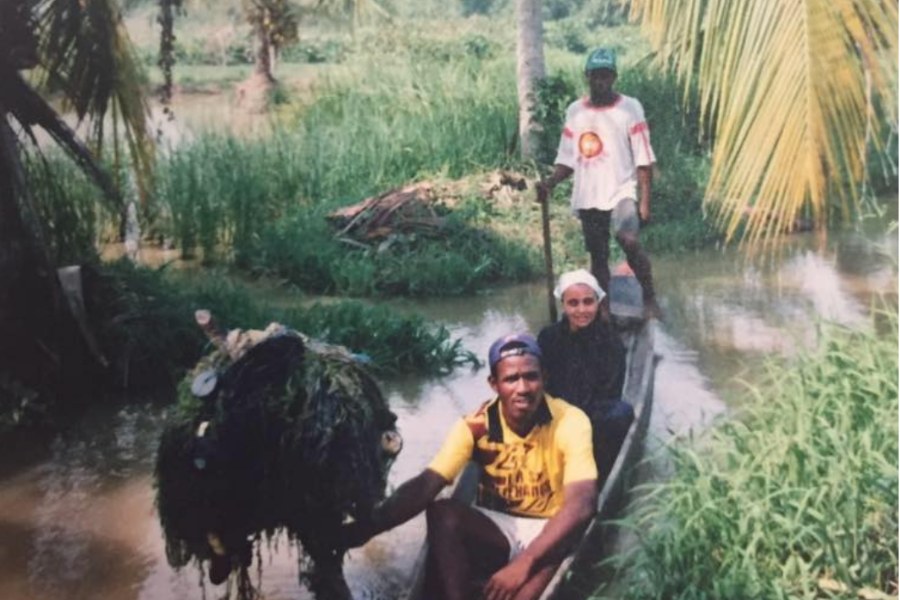
Freshwater Fieldwork

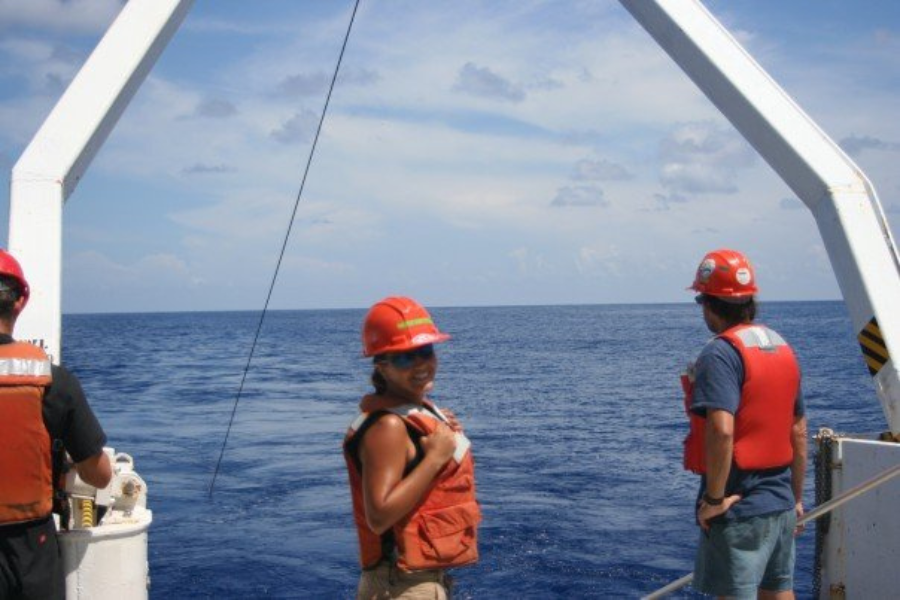
Marine Fieldwork

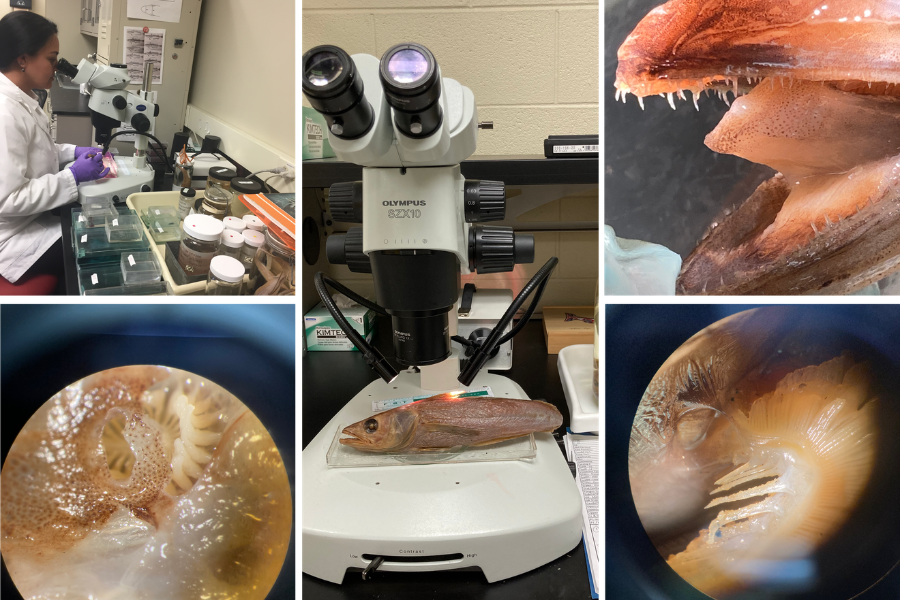
Collections & Morphology

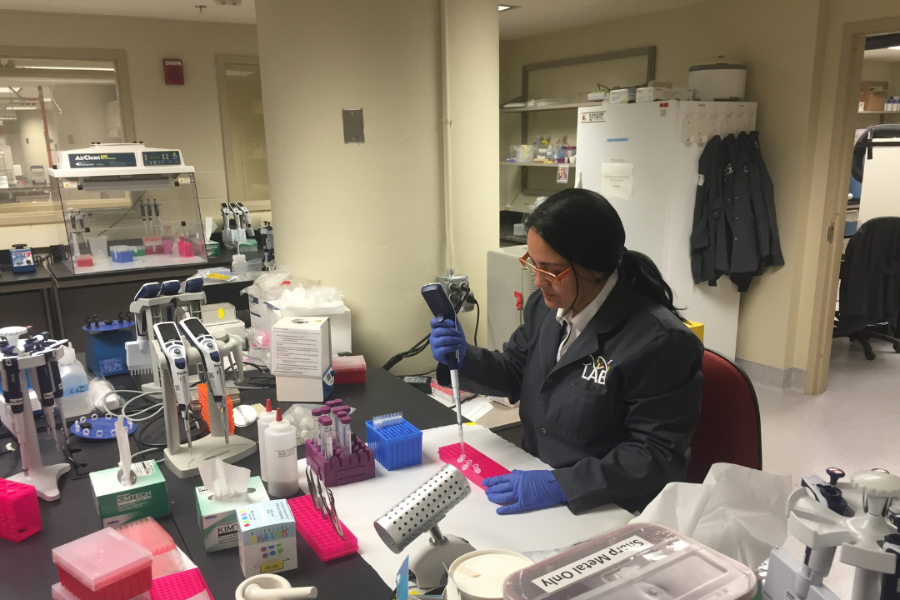
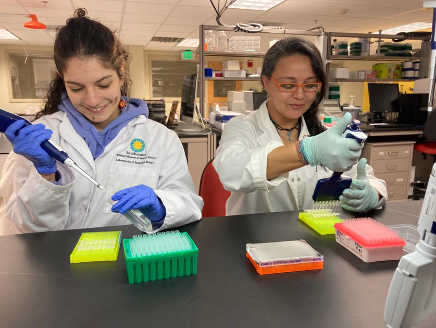
Genomics & Laboratory Work

SCIENCE IS COLLABORATIVE

Research Is Better Together

The questions I care about are bigger than any one method—or any one person. I’m fortunate to work with scientists who bring different perspectives, from taxonomy, genomics, morphology, and paleontology to ecology, modeling, collections, and field biology. Those collaborations are one of my favorite parts of doing science.

AMQ

Andrea M. Quattrini

Smithsonian, NMNH

Deep-sea ecology and evolution of corals and fishes.

GC

Giorgio Carnevale

University of Turin

Fish paleontology, systematics, and evolution of teleost fishes.

AWD

Amanda W. Demopoulos

USGS

Deep-sea benthic ecology, biodiversity, and ecosystem function.

SH

Santiago Herrera

Lehigh University

Deep-sea biodiversity, molecular ecology, and eDNA.

MO

Matthew Ogburn

Smithsonian, SERC

Estuarine ecology, fisheries species biology, and ecosystem dynamics.

HLO

Hannah L. Owens

University of Copenhagen

Biodiversity, ecological niche modeling, and biogeography.

CB

Carole Baldwin

Smithsonian, NMNH

Fish systematics, evolution, and biodiversity of marine fishes.

NGP

Nancy G. Prouty

USGS

Marine geochemistry, paleoceanography, and environmental change.

MENTORING & TRAINING

Mentorship in Practice

Some of my favorite moments in science happen while looking at a specimen, working through a problem, or figuring something out together. I enjoy sharing what I’ve learned with students and early-career scientists—and just as often, learning from the questions and perspectives they bring.

I also enjoy sharing science beyond research through museum programs, schools, public talks, and Spanish-language engagement.

Explore Education & Engagement →